
Designer’s Guide
A dining table has to work visually, structurally, and operationally. It must fit the seating plan, keep guests comfortable, resist daily service wear, and remain stable through cleaning and repeated use.
 Category reference
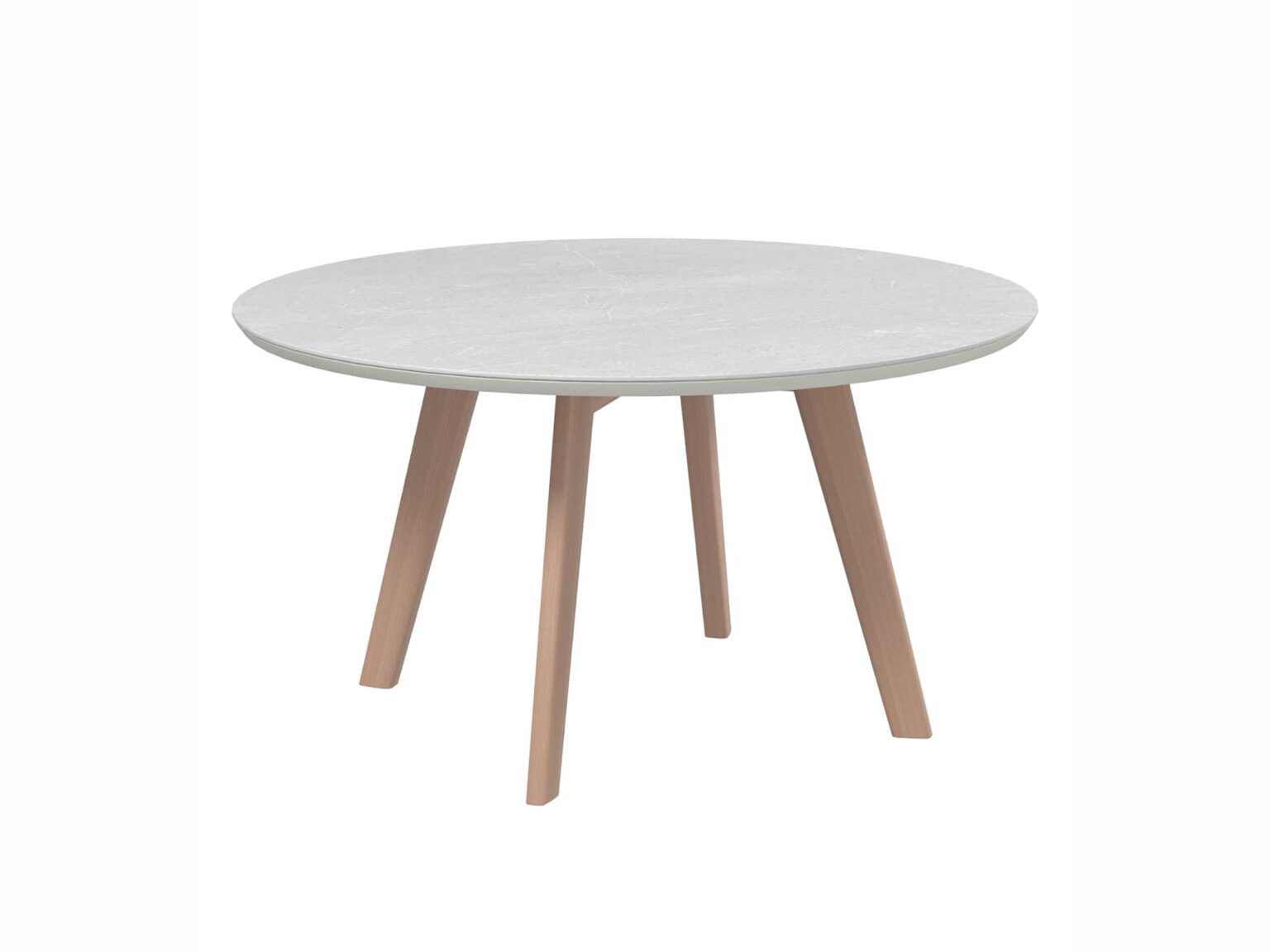
Detail examples to review
Use the photos as prompts for edge, base, top finish, weight, glide, and service-clearance decisions.


1. Quick Specification Targets
| Item | Typical target | Why it matters |
|---|---|---|
| Dining height | 730-760 mm | Standard range for comfortable dining posture. |
| Knee clearance | 650 mm minimum | Prevents legs from feeling trapped under the top or apron. |
| Width per guest | 600-700 mm | Sets realistic covers and table size. |
| Depth for opposite settings | 800-1000 mm | Allows plates, glasses, and shared service space. |
| Sofa/banquette table clearance | Project-specific mockup | Banquette posture changes the correct top location. |
2. Choose the Right Dining Table Type
Choose the table type from service model, seating plan, and base clearance.
- Two-person table for flexible restaurant layouts.
- Four-person table for standard dining modules.
- Communal table for social and crew/passenger gathering spaces.
- Pedestal table for flexible chair positions.
- Four-leg table for a lighter residential expression.
- Fixed or floor-mounted table where movement must be controlled.
3. Comfort, Proportion, and Use Case
The table must relate to the chair, not just to the floor.
- Check chair arms, knees, and foot position against the selected base.
- Use pedestal bases where chair flexibility matters.
- Review edge thickness because it changes perceived and real clearance.
- Confirm top size with actual plate, glass, and service settings.
- Mock up banquette tables before final production.
4. Construction and Material Strategy
Table tops and bases need separate durability logic.
- Veneered plywood, MDF, solid timber, laminate, HPL, compact surface, ceramic, stone, or metal tops.
- Impact-resistant edge profiles such as solid timber, bevel, bullnose, or protected edge.
- Powder coated steel, stainless steel, timber, or weighted pedestal bases.
- Adjustable glides for uneven floors.
- Secure mechanical fixing between top and base.
5. Durability and Compliance Questions
For cruise, hospitality, and other heavy-use projects, specify the product as a maintained asset. Ask what must be documented before samples are approved, because the final material package and construction are what matter.
- Upholstery abrasion target: 50,000+ Martindale for high-use public areas where upholstery is used.
- Confirm flame performance, material declarations, and owner documentation requirements before final sample approval.
- Specify cleanable surfaces compatible with the actual housekeeping chemicals and frequency.
- Use replaceable glides, feet, covers, or wear components wherever repeated service is expected.
- Review mockups under project lighting so color, texture, height, and proportion are approved together.
Important: compliance is project-specific. Final approval should always be checked against the vessel, flag, class society, owner specification, local code, and the exact material package selected for production.
6. Wear Zones to Detail Before Production
- Table perimeter edge.
- Top surface at service zones.
- Base foot and guest shoe contact.
- Glides and leveling points.
- Top-to-base fixing points.
7. Layout Planning
- Coordinate table size with chair width and arm height.
- Allow service aisles before maximizing seat count.
- Check base positions against guest knees and chair legs.
- Use smaller movable tables only when stability remains acceptable.
8. Common Specification Mistakes
- Selecting tops before chair models are chosen.
- Using fragile edge details in high-turnover restaurants.
- Forgetting adjustable glides on uneven floors.
- Choosing a pedestal base too small for the top.
- Ignoring service tray and plate spacing.
9. What to Send for a Precise Quotation
The better the input, the faster the specification can become a buildable offer. Include:
- Top dimensions, height, and shape.
- Seating count and chair model.
- Top material, edge profile, and finish sample.
- Base type, finish, and fixing method.
- Floor finish and leveling requirement.
- Cleaning, compliance, and documentation requirements.
Ready to specify custom indoor dining tables?
Njords Ark can translate sketches, mood boards, product references, or full drawing packages into a buildable furniture specification for cruise, hospitality, and high-use interior projects.
Contribute to this guide
Are you a cruise, hospitality, marine, or furniture designer with practical experience customizing indoor dining tables? Share a detail, pitfall, material note, or specification lesson and we may include selected notes in a future update.
Contributors can be credited by name and company, or kept anonymous if preferred.
Submit a designer note or use the contact form.


