
Designer’s Guide
Outdoor side tables support the small rituals of a lounge space: drinks, books, towels, phones, and service trays. They must be easy to place but stable enough for exterior use.
 Category reference
Detail examples to review
Use the photos as prompts for edge, base, top finish, weight, glide, and service-clearance decisions.


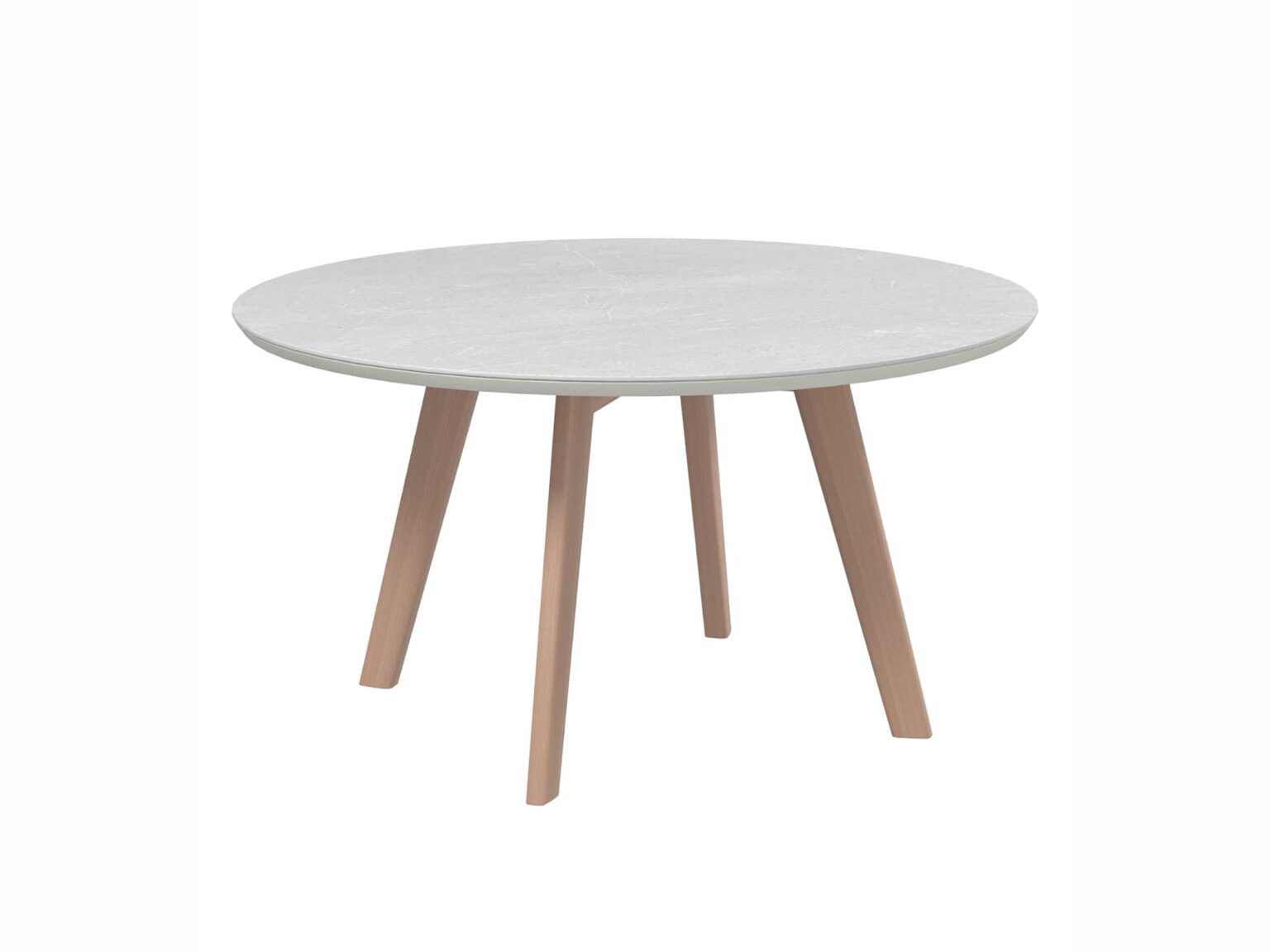
1. Quick Specification Targets
| Item | Typical target | Why it matters |
|---|---|---|
| Typical height | 420-560 mm | Matches lounge arms and sunlounger surfaces. |
| Top width or diameter | 320-500 mm | Supports drinks without crowding. |
| Base footprint | Stable for height and exposure | Prevents tipping. |
| Moveability | Operations-dependent | Balances staff handling and wind stability. |
2. Choose the Right Outdoor Side Table Type
Choose the outdoor side table type by function and exposure.
- Round outdoor side table.
- Square outdoor side table.
- Drink table.
- C-shaped outdoor table.
- Nested table.
- Weighted pedestal table.
3. Comfort, Proportion, and Use Case
A useful side table is close, stable, and easy to clean.
- Match table height to the adjacent seat, arm, or lounger.
- Use a top large enough for real guest items.
- Avoid bases that block feet or cleaning tools.
- Use weighted bases for tall narrow tables.
- Confirm whether staff need to move tables daily.
4. Construction and Material Strategy
Small outdoor tables still need serious weather detailing.
- Powder coated aluminum, teak, treated hardwood, ceramic, compact surface, UV-stable weave or rope accents, and stainless fasteners.
- Drainable tray tops or water-shedding surfaces.
- Outdoor non-marking glides.
- Impact-resistant edges.
- UV-stable finish.
5. Durability and Compliance Questions
For cruise, hospitality, and other heavy-use projects, specify the product as a maintained asset. Ask what must be documented before samples are approved, because the final material package and construction are what matter.
- Use UV-stable finishes, fibers, and upholstery suited to the exposure level.
- Confirm corrosion-resistant frames and hardware, especially in salt-air or pool environments.
- Avoid water traps and specify drainage paths through cushions, tops, frames, and weave details.
- Specify replaceable glides, feet, slings, covers, or wear components before production.
- Confirm cleaning chemistry, cover/storage routine, and project documentation requirements before final sample approval.
Important: compliance is project-specific. Final approval should always be checked against the vessel, flag, class society, owner specification, local code, and the exact material package selected for production.
6. Wear Zones to Detail Before Production
- Top surface.
- Top edge.
- Base foot.
- Handles or tray lips.
- Glides.
7. Layout Planning
- Place tables where guests can reach them from chairs, sofas, and loungers.
- Keep enough clearance for cleaning and service.
- Coordinate table heights across mixed outdoor furniture.
- Avoid placing loose light tables in wind corridors.
8. Common Specification Mistakes
- Making drink tables too small to be useful.
- Using tray lips that trap water.
- Underweighting tall pedestal tables.
- Forgetting deck glide compatibility.
- Choosing finishes without sunscreen, salt, and cleaning review.
9. What to Send for a Precise Quotation
The better the input, the faster the specification can become a buildable offer. Include:
- Top size, height, and shape.
- Material, frame finish, and base style.
- Exposure level, deck surface, and glide requirement.
- Moveability, weighting, or fixing requirement.
- Adjacent furniture dimensions.
- Cleaning and documentation requirements.
Ready to specify custom outdoor side tables?
Njords Ark can translate sketches, mood boards, product references, or full drawing packages into a buildable furniture specification for cruise, hospitality, and high-use interior projects.
Contribute to this guide
Are you a cruise, hospitality, marine, or furniture designer with practical experience customizing outdoor side tables? Share a detail, pitfall, material note, or specification lesson and we may include selected notes in a future update.
Contributors can be credited by name and company, or kept anonymous if preferred.
Submit a designer note or use the contact form.


